
Quick Facts
Overview
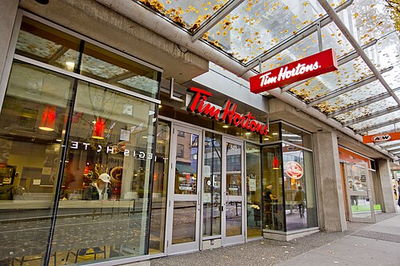
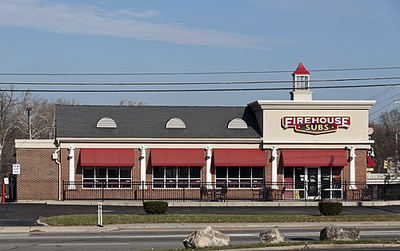
Restaurant Brands International (RBI) is one of the world's largest quick-service restaurant companies, with nearly $45 billion in annual system-wide sales and more than 32,000 restaurants across more than 120 countries. It owns four iconic fast food brands: Burger King, Tim Hortons, Popeyes Louisiana Kitchen, and Firehouse Subs.
RBI was created in 2014 through the merger of Burger King and Tim Hortons, orchestrated by 3G Capital, a Brazilian-American private equity firm. The company is incorporated in Ontario, Canada and headquartered in Toronto, but its largest shareholder and the entity that controls the most voting power is 3G Capital — a firm founded by three Brazilian billionaires.
This creates a peculiar ownership situation: Burger King is often called "American" or "American-Canadian," but the real controlling power behind the company is Brazilian. Google and Wikipedia correctly note the Canadian incorporation and American operational roots, but this classification obscures who actually makes the decisions and profits the most.
The Ownership Story: From Miami Grill to Brazilian-Canadian Empire
Few fast food companies have had as many owners as Burger King. The brand has changed hands repeatedly since its founding, culminating in control by a Brazilian investment firm that most consumers have never heard of.
3G Capital: The Brazilians Behind the Burgers
3G Capital is arguably the most influential private equity firm in the global food industry — yet most consumers have never heard of it. Founded in 2004 and headquartered in New York City, 3G Capital is the investment vehicle of three Brazilian billionaires who have systematically acquired and restructured some of the world's largest consumer brands.
The Three Founders
 Brazilian-Swiss
Net worth: ~$17 billion
Born 1939, Rio de Janeiro
Former tennis champion
Largest individual shareholder of AB InBev
BrazilianNet worth: ~$4 billion
Born 1950, Rio de Janeiro
Former chairman and CEO of AmBev
Board member of AB InBev
BrazilianNet worth: ~$4 billion
Born 1948, Rio de Janeiro
Former chairman of Lojas Americanas
Partner in 3G Capital
3G Capital's Portfolio & Track Record
The three founders' investment philosophy revolves around zero-based budgeting (ZBB) — a management approach where every expense must be justified from scratch each period. This has earned them a reputation as aggressive cost-cutters who boost margins rapidly but sometimes at the expense of long-term brand investment.
| Company | Year | Role | Status |
|---|---|---|---|
| AB InBev (Budweiser, Corona, Stella Artois) | 1989-present | Controlling shareholders via AmBev merger | Still control ~1/3 of shares |
| Burger King | 2010 | Acquired for $4B, merged into RBI 2014 | Via RBI (~26% voting) |
| Kraft Heinz | 2013-2023 | Co-created with Berkshire Hathaway | Fully exited in Q4 2023 |
| Hunter Douglas | 2022 | Acquired 75% stake | Active |
| Skechers | 2025 | Investor | Active |
| Lojas Americanas | 1982-2023 | Founding investment | Accounting scandal; $4B fraud |
"American-Canadian" — or Brazilian?
If you Google "Burger King," you'll see it described as an "American-Canadian multinational chain of hamburger fast food restaurants." This is technically correct — Burger King was founded in America and is now owned by a Canadian-incorporated company. But it tells only part of the story.
Why the label is misleading
The classification "American-Canadian" reflects the geography of incorporation and operations, but it obscures the geography of control:
| Aspect | Location | What it means |
|---|---|---|
| Founded |  Miami, FL (1954) Miami, FL (1954) | American origin, American brand identity |
| Incorporated |  Ontario, Canada (2014) Ontario, Canada (2014) | Canadian for tax purposes |
| Corporate HQ | Toronto, ON | Tim Hortons presence; Canadian image |
| Operational HQ | Miami, FL | Burger King's management runs from here |
| Controlling shareholder | 3G Capital (Brazilian founders) | Holds ~26% voting power, largest single block |
| Founders of 3G Capital | All three from Rio de Janeiro | The ultimate decision-makers are Brazilian |
The tax inversion question
When the Burger King–Tim Hortons merger was announced in 2014, it was widely criticized as a tax inversion — a strategy where a US company reincorporates in a lower-tax jurisdiction through a merger. At the time, the US corporate tax rate was 39.1% compared to Canada's 26%. US politicians, including President Obama and Senator Sherrod Brown, publicly condemned the move.
3G Capital co-founder Alex Behring denied the tax motivation, saying the merger was "fundamentally about growth and creating value through accelerated expansion." Critics noted that Burger King had already reduced its effective US tax rate to 27.5% through various sheltering techniques, suggesting the tax benefit was real but not as dramatic as headlines implied. The strategic logic — pairing a strong North American coffee brand (Tim Hortons) with a global burger brand (Burger King) — was sound on paper, and the subsequent additions of Popeyes and Firehouse Subs suggest the real goal was building a multi-brand restaurant platform.
Major Shareholders
RBI trades on both the New York Stock Exchange (NYSE: QSR) and the Toronto Stock Exchange (TSX: QSR). As of late 2024, approximately 82% of shares are held by institutional investors.
| Shareholder | Type | Est. Stake | Notes |
|---|---|---|---|
| 3G Capital | Private Equity (Brazilian) | ~26% voting | Largest single shareholder. Gradually reducing stake via secondary offerings. Held 51% at RBI's founding in 2014. |
| Vanguard Group | Asset Manager | ~3.4% (~15.3M shares) | Passive index fund ownership. Valued at ~$1 billion. |
| BlackRock | Asset Manager | ~4% | Through iShares ETFs and index funds. |
| State Street | Asset Manager | ~4% | Through SPDR ETFs and index funds. |
| Fidelity | Asset Manager | ~3% | Through actively managed mutual funds. |
| Capital International | Asset Manager | ~2% | Increased stake in early 2026. |
| T. Rowe Price | Asset Manager | ~2% | Active investor. |
Note: Berkshire Hathaway (Warren Buffett) provided $3 billion in preferred equity for the 2014 merger and held approximately 4.8% of RBI shares in the late 2010s. However, Berkshire completely exited its position by August 2020.
Stock Listings
| Exchange | Ticker | Currency |
|---|---|---|
| New York Stock Exchange | QSR | USD |
| Toronto Stock Exchange | QSR | CAD |
RBI is also available as TSX: QSP.UN (Restaurant Brands International Limited Partnership exchangeable units).
Brands & Restaurant Count

Brand Details
| Brand | Founded | Acquired by RBI | Headquarters | Concept |
|---|---|---|---|---|
| Burger King | 1954 (Miami, FL) | 2014 (via 3G Capital) | Miami, FL | Flame-grilled burgers (Whopper) |
| Tim Hortons | 1964 (Hamilton, ON) | 2014 (merger) | Toronto, ON | Coffee & donuts, Canadian icon |
| Popeyes | 1972 (New Orleans, LA) | 2017 ($1.8B) | Miami, FL | Louisiana-style fried chicken |
| Firehouse Subs | 1994 (Jacksonville, FL) | 2021 ($1.0B) | Jacksonville, FL | Hot sub sandwiches |
Nordic Operations: Who Runs Burger King in Denmark?
Burger King does not directly operate its own restaurants in the Nordics. Instead, it uses a master franchise model — a single company holds the rights to develop and sub-franchise Burger King restaurants across a region.
Burger King Scandinavia — Ring International Holding
Since 2020-2021, the master franchise rights for Burger King in Denmark, Sweden, and Norway have been held by Ring International Holding AG (RIH), an Austrian holding company. RIH acquired the Burger King Scandinavia franchise from the previous holder (Umoe Restaurants, a Norwegian company).
| Market | Franchise Holder | Est. Restaurants |
|---|---|---|
 Denmark Denmark | Ring International Holding AG (Austria) | ~45 |
 Sweden Sweden | Ring International Holding AG (Austria) | ~110 |
 Norway Norway | Ring International Holding AG (Austria) | ~95 |
 Finland Finland | Restel (Scandic Hotels subsidiary) | ~80 |
Tim Hortons, Popeyes, and Firehouse Subs currently have no significant presence in the Nordics. Tim Hortons has expanded internationally (China, UK, India, Middle East) but has not entered the Danish or Scandinavian market as of 2026.
Ownership Chain
Other major shareholders include Vanguard (~3.4%), BlackRock (~4%), State Street (~4%), and Fidelity (~3%). Berkshire Hathaway fully exited its position in 2020.
Frequently Asked Questions
Want to know who owns your everyday brands?
The Scan Owner app lets you scan any product barcode or search by brand name — and instantly see who owns it, where the company is from, and who the shareholders are. Available for iPhone and Android, with over 2 million barcodes and 300,000 brands in our database — and growing every day.
We practice what we preach: Scan Owner collects no personal data. No tracking, no profiles, no data resale. Powered by European AI and built in Denmark.
Sources
- Restaurant Brands International — Q4 2024 Results (accessed 11 March 2026)
- Wikipedia — Restaurant Brands International (accessed 11 March 2026)
- Wikipedia — 3G Capital (accessed 11 March 2026)
- Yahoo Finance — RBI Ownership Breakdown (accessed 11 March 2026)
- TradingView — 3G Capital Slices Stake (Nov 2025) (accessed 11 March 2026)
- CNBC — 3G Capital Exits Kraft Heinz (accessed 11 March 2026)
- Nasdaq — Berkshire Sells RBI Stake (2020) (accessed 11 March 2026)
- Ring International Holding — RIH Acquires Burger King Scandinavia (accessed 11 March 2026)
- RBI — Secondary Offering Pricing (Nov 2025) (accessed 11 March 2026)
- Wikipedia — Jorge Paulo Lemann (accessed 11 March 2026)
- Forbes — Jorge Paulo Lemann Profile (accessed 11 March 2026)
- 3G Capital — About 3G Capital (accessed 11 March 2026)